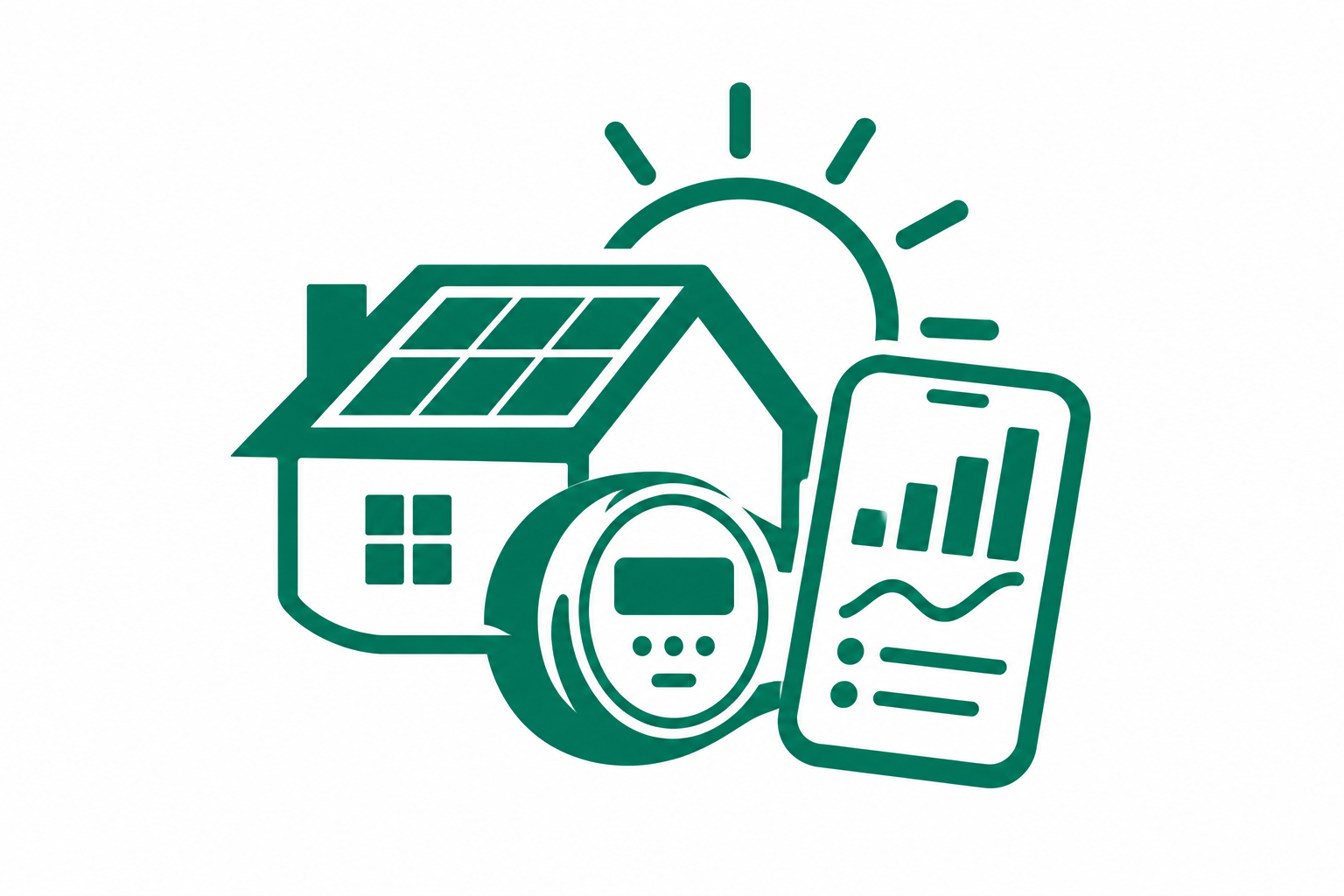
Most residential meters track two cumulative totals: electricity your home draws from the grid and electricity your panels send back. The numbers climb independently over the billing period. A quick glance at the display may also show which direction power is flowing right now — that instant reading is different from the monthly totals printed on your statement.
Contact SunLedger
Questions about your meter, bill, or app in the first year after activation.
Describe what you are seeing — a register that will not stop climbing, a bill line that makes no sense, or an app graph that changed overnight. We reply with observations from documented field notes, not equipment quotes or tariff negotiations.
Send a Message
Common First-Year Questions
Quick answers before you write — tap a question to expand.
Panels reduce energy you purchase, but many accounts still carry fixed delivery charges, minimum service fees, and taxes. Your bill reconciles what you consumed, what you exported, and what your rate plan allows to carry forward. A strong production month does not always remove every line on the statement.
Monitoring software charts inverter output, which follows daylight length, sun angle, and weather. Long summer days produce tall daily bars; shorter winter hours and cloud cover compress the curve. Comparing the same calendar week across seasons usually explains the gap better than assuming equipment failure.
After sunset the inverter stops producing, so your household draws from the grid unless you have separate storage that the monitoring app tracks differently. Overnight import on the meter is normal — it reflects refrigerators, HVAC schedules, and standby loads that run whether or not panels produced during the day.
No. SunLedger is an independent guide project — we do not issue bills, adjust rate plans, dispatch installers, or accept warranty claims. We help you interpret what you see and suggest which type of provider to contact when something falls outside our scope.
We do not provide instructions for panel work, wiring changes, or grid interconnection steps. Those tasks require a licensed electrician and must follow your utility's current rules. For tariff details and credit calculations, consult your signed service agreement and your utility's official published schedules.
Our Location
SunLedger is based in Austin, Texas. Visits are by appointment only.
Important Information
The materials on this site describe living with solar panels during the first year after activation. Content is informational in nature and is designed to help you read meters, bills, and monitoring data with more confidence.
SunLedger is not a solar installation company, a utility provider, or an equipment retailer. We do not install panels, issue utility bills, change rate plans, sell inverters or batteries, or compare equipment brands and models.
We do not promise specific financial outcomes, bill totals, or production levels. Tax credits, net metering rules, and interconnection requirements vary by state and utility territory — consult official sources and your own service agreement for current terms.
Electrical panel work, grid interconnection, and structural roof assessments must be performed by licensed professionals. Do not attempt to modify your service entrance, wiring, or mounting hardware based on website content alone.
Every home has different consumption habits, shading conditions, and tariff structures. Another household's first-year experience is a reference point, not a template. Decisions about system size, installer choice, and energy use remain entirely yours, and SunLedger accepts no liability for outcomes based on information presented here.